




What is asbestos analysis?
What an asbestos analysis is, how it is done and when you need one.
Read the full guide →100 000+ samples analysed
Reliable results with a JEOL electron microscope. Order online, post your sample and get the result by email on the same day the sample arrives at the laboratory.
Electron microscope analysis
The JEOL SEM-EDS electron microscope combines the microscope image with an elemental analysis. Any fibres found in the material are assessed on both their structure and their composition.
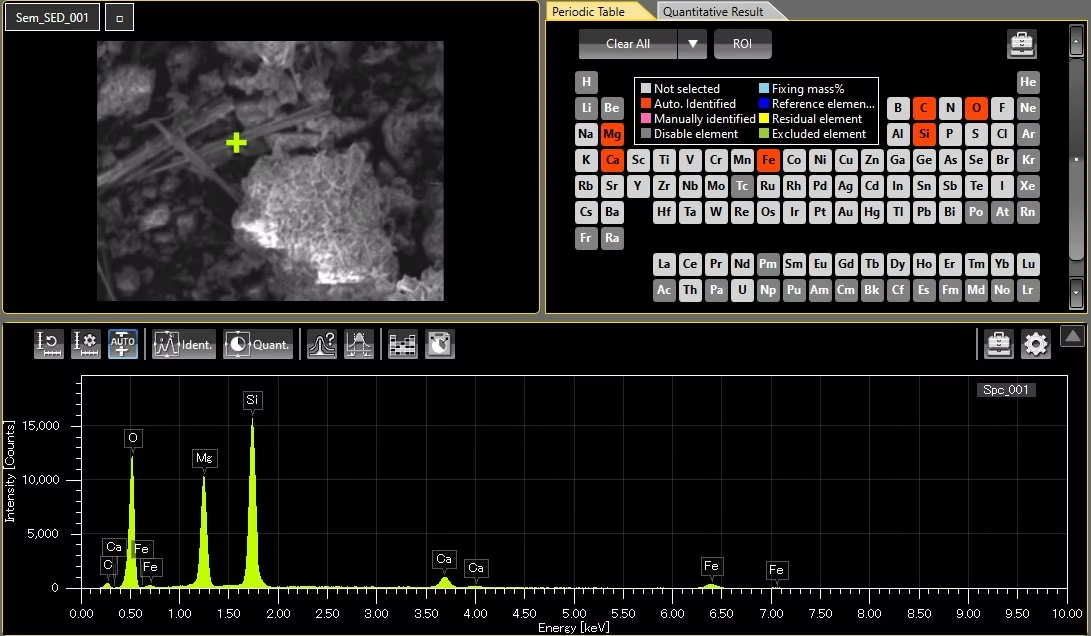
An asbestos analysis makes sense before renovation, demolition or alterations in any building that was built or renovated before asbestos was banned. All asbestos has been banned across the EU since 1 January 2005, and many countries banned it earlier, so materials from before then may contain asbestos – and a positive result can change the schedule and cost of the whole project. Semlab analyses asbestos samples to ISO 22262-1 with a JEOL SEM-EDS electron microscope, which is precise enough to find even very small asbestos fibres in the material. You post the sample to our laboratory in Finland and get the result on the same day the sample arrives. The analysis costs €49.99 incl. VAT per sample, with no hidden costs, compulsory surcharges or express fees. We have made the process simple enough for anyone to order, send a sample and read the result, even without any prior knowledge of asbestos or sampling.
The asbestos sample is taken directly from the building material. Typical materials worth testing are vinyl floor tiles and vinyl flooring, floor adhesive, tile adhesive, joint sealant, filler, asbestos cement in facade and roof sheets, roofing felt and old floor paint. Asbestos was used for decades in hundreds of different building products. You carefully remove a piece about the size of a matchbox, seal it in an airtight zip-lock bag so that no dust escapes, and post it to us. Only send firmly bound material by post, never dusty material such as pipe insulation or sprayed asbestos. In the laboratory the sample is examined with a JEOL SEM-EDS electron microscope, which reliably distinguishes the six most common types of asbestos: chrysotile (white asbestos), crocidolite (blue asbestos), amosite (brown asbestos), as well as anthophyllite, tremolite and actinolite. You receive the result by email as a clear report in English.
Why Semlab? We have analysed more than 100 000 asbestos samples. Our experience and modern equipment give you a result you can rely on, at a fixed price with no hidden costs. We don't charge extra for urgent analyses: every sample that arrives is analysed the same day, with no surcharge and no separate express option. Our JEOL SEM-EDS electron microscope finds even small amounts of asbestos fibres, and LIVE-EDS elemental analysis makes sure that a purely visual assessment does not lead to a wrong result. You order as a private individual and pay by card when you order. Post the sample from anywhere in the EU with your national postal service, as a letter or small parcel, and the result arrives on the same day the sample reaches the laboratory. Ordering takes less than five minutes.
More about asbestos analysis
All types of asbestos have been banned across the EU since 1 January 2005 (Directive 1999/77/EC), and many member states banned it earlier. Asbestos is therefore common in buildings that were built or renovated before the ban. EU worker protection rules (Directive 2009/148/EC) set requirements for handling asbestos during demolition and renovation, and national rules differ – check your country's authority. Either way, you need to know whether a material contains asbestos before the work starts. In practice, an asbestos analysis is the only reliable way to find out whether a building material contains asbestos. You cannot see it with the naked eye, and without an analysis asbestos cannot be told apart from other mineral fibres. The Semlab report documents the result and the asbestos type for each sample. If the whole building has to be checked before a larger demolition, an on-site asbestos survey is also needed.
Asbestos is not a single substance but a collective name for six different minerals. The types were used for different purposes and are not equally dangerous, so identifying the exact type is just as important as detecting asbestos at all. Chrysotile, also called white asbestos, is the most common type in building materials and was used mainly in floor coverings, roof sheets, pipe insulation and cement products. It is considered less dangerous than the other types, but its fibres also cause lung cancer and mesothelioma after prolonged exposure. Crocidolite, also called blue asbestos, is the most dangerous type because of its thin, stiff fibres, and was used mainly in thermal insulation, fire protection boards and industrial plants. Amosite, also called brown asbestos, is often found in pipe insulation and in materials from shipbuilding. Anthophyllite, tremolite and actinolite often occur as impurities in other minerals, and identifying them is exactly why a JEOL SEM-EDS electron microscope is needed rather than a light microscope.
The most important thing when taking an asbestos sample is to avoid dust. Remove the sample carefully and wear disposable gloves. An FFP3 respirator is recommended. From vinyl flooring or a vinyl floor tile, cut a piece of about 5 x 5 cm at a corner or seam with a utility knife so that the adhesive underneath comes with it. For asbestos-cement facade and roof sheets, a piece of a few centimetres that you carefully break off is enough. Scrape off a small piece of filler or joint sealant, and with tiles take the sample from the tile adhesive behind the tile, not from the ceramic itself. Only send firmly bound material by post. Dusty material such as pipe insulation or sprayed asbestos must not be sent by post. Pack each sample in its own resealable zip-lock bag, write the material and the sampling spot clearly on the bag, and post the samples to us in a padded envelope or a small box.
The Semlab analysis report is a PDF in English. The first page states clearly whether the samples contain asbestos, and the second page describes the method and conditions. For each sample, the results table shows the site, material and sampling spot, the asbestos type found, the dust or risk class 0–5 and the result: contains asbestos, does not contain asbestos or inconclusive. The report also includes the customer details, the date of receipt and number of samples, the sampler, the report date and number, the method (JEOL SEM-EDS electron microscope, ISO 22262-1), an assessment of the results and the analyst's electronic signature. If you sent photos of the samples, they are attached at the end of the report. If no asbestos is found, the report clearly says "Does not contain asbestos", but the result only applies to the sample that was analysed. If asbestos is found, the asbestos type and dust class are given. The removal should then be carried out by a company that specialises in asbestos removal and plans the protective measures and disposal. Keep the report with the rest of your property documents, as you may need it for later renovations or when you sell.
A positive asbestos result does not mean the building is dangerous or that you have to move out. In intact, undamaged material the asbestos stays bound and does not get into the indoor air. A risk only arises when the material is broken, sanded, drilled or demolished without suitable protective equipment and working methods. The most important thing after a positive result is therefore to hire a company that specialises in asbestos removal before any renovation work starts. Worker protection rules govern how asbestos may be handled and removed, and a reputable removal company plans the work, seals off the work area and makes sure the room is safe once the work is finished. The cost of professional removal is always small compared with the risk of demolition done wrongly. Remember too that asbestos waste is hazardous waste. It must be packed airtight and taken to an approved collection point. Your local authority or waste centre can tell you how this works where you live.
From sample to report
Enter your contact details and the details of your samples in the web form.
You pay by card when you order: Visa, Mastercard, Apple Pay or Google Pay.
Send the samples as a letter or small parcel with your national postal service to our laboratory in Finland.
The samples are logged as received and matched to your order.
The fibres are identified with the electron microscope according to ISO 22262-1.
A clear results report in English is emailed the same day the samples arrive.
Why Semlab
Fixed price
Analysing an asbestos sample costs €49.99 incl. VAT. No hidden costs.
Fast result
The result is emailed to you on the same day the sample arrives at the laboratory.
Reliable analysis
Scanning electron microscopy and LIVE-EDS to ISO 22262-1.
Simple ordering
Order online, pay by card and post the sample. No complicated forms.
Popular services
Who it's for
Homeowners
You are planning a renovation and want to know whether the materials contain asbestos.
Flats and apartments
You want to renovate the kitchen or bathroom in an older flat.
Holiday homes
You want to renovate or extend an older holiday home.
Home buyers
You want to know what is in the materials of an older building.
Guides
What an asbestos analysis is, how it is done and when you need one.
Read the full guide →The most common materials and building parts in which asbestos was used.
Read the article →Why you should check for asbestos before demolition, and how to do it safely.
Open the renovation guide →You can post your asbestos sample from anywhere in the EU with your national postal service. Read more about an asbestos test in your city.
Fast, reliable laboratory asbestos analysis. Result on the day the sample arrives.